Introduction
Many of us grew up watching the Soviet animated series Kolobki Investigate. The investigation begins with four mysterious holes in a rooftop. The chief detective measures the distance between them with a tape measure and unexpectedly concludes:
— These holes are elephant footprints.

His colleague laughs:

— Since when do elephants fly?

— Then they do.
Imagine that I publish a detailed description of a flying elephant. I carefully document its body size, anatomy, diet, behavior, and geographic distribution, include several well-executed scientific illustrations, and the paper is accepted by a peer-reviewed journal.
From that moment on, a publication exists that others can cite.
A scientific paper does more than introduce a new claim. It creates a new object of citation. From that point forward, subsequent authors must acknowledge its existence in the literature, regardless of how convincing the original evidence was. Any future author could truthfully write: “A description of a flying elephant has been published.”
The publication itself does not prove that flying elephants exist. However, it introduces a published report of a flying elephant into the scientific literature. That report may be cited, discussed, compared with new observations, and eventually either supported or refuted—even if the original evidence was weak.
This is precisely why extraordinary claims require an exceptionally strong evidential foundation.
Years later I read Vitaly Tanasiychuk’s book Incredible Zoology. One chapter tells the story of the German zoologist Gerolf Steiner, who described an entirely fictional order of animals so convincingly that many readers initially accepted it as genuine science. There were Latin names, illustrations, morphology, behavior, taxonomy—everything looked like a real scientific publication.
Today these stories make us smile. Yet their value was never the joke itself. They demonstrated how easily scientific form can create an illusion of credibility. They remind us of a simple principle: a story is not evidence, even if it later turns out to be correct.
Scientific mistakes rarely happen because researchers deliberately intend to deceive.
Much more often, the problem begins when a conclusion starts living independently of the observations on which it was originally based.
- A photograph does not make a hypothesis true.
- A video does not replace an experiment.
However, without them, an observation gradually becomes nothing more than a retold story. Primary documentation allows the next researcher not merely to trust the author, but to evaluate the original observation independently.
Do not preserve conclusions alone. Preserve the data from which they were drawn.
Without primary data, every discovery eventually turns into a retelling.
This is how an insufficiently documented claim can gradually become a widely cited fact.
If an observation cannot be preserved completely, it should be documented as thoroughly as modern methods allow.
Seeing Once Is Better Than Hearing a Hundred Times
An observation exists only once—the moment a researcher makes it. Everything afterwards depends on how completely that observation has been preserved.
The value of photographs, videos, microscope slides, preserved specimens, or living cultures is not limited to illustration. They allow future researchers to examine the original observation rather than relying solely on someone else’s description.
Digital documentation is valuable not only scientifically but educationally as well. It allows biological processes to be shown directly instead of merely described or schematically illustrated.
Why should we preserve video?
- A photograph captures a moment.
- A video captures a process.
In many cases, the process itself contains information that cannot be extracted from a single image. Time-lapse recordings of embryonic development provide an excellent example.
Time-lapse imaging allows us to observe not only the sequence of changes but also their timing, speed, and the unique characteristics of each developmental stage.
Such recordings make it possible to refine existing descriptions and reveal details that are easily overlooked during occasional observations.
Examples of documented observations:
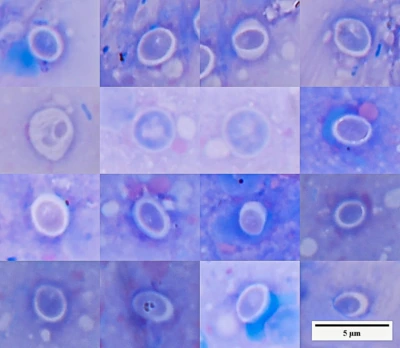
Microphotographs
 Gallery
Images, videos, and visual observations
Gallery
Images, videos, and visual observations
Microscopic Observations
Videos, time-lapses and microscopic observations
A Brief History of Scientific Documentation
Throughout the nineteenth and early twentieth centuries, biological illustrations were the primary means of documenting observations. Photography was still limited, so researchers attempted to reproduce what they saw as accurately as possible through scientific drawings.

With the development of microphotography and later digital photography and videography, the situation fundamentally changed. Scientists could now preserve not merely their interpretation of an observation, but the observation itself. Modern technologies allow morphology, behavior, and dynamic biological processes to be documented with a level of completeness that was previously impossible.
Scientific illustration has not lost its value. It helps emphasize diagnostic features, simplify complex structures, and direct the reader’s attention toward biologically important characteristics. This is precisely why the term scientific illustration exists—it is not a photographic copy of reality, but an interpretation created by the observer.
However, a drawing used as the only evidence of an observation is fundamentally unverifiable.
For this reason, photographs and videos have become an essential part of scientific evidence rather than mere illustrations.
It is impossible to determine whether a drawing reflects an actual observation, the author’s interpretation, or imagination alone. Without primary documentation, a drawing ceases to function as evidence and becomes merely an assertion made by its author.
Modern scientific illustrations should therefore complement photographs and videos—not replace them.
The more extraordinary the conclusion, the greater the requirements for preserving the primary evidence.
Why Does This Matter to Aquarists?
Many people believe that microscopes are tools only for scientists.
In reality, they are valuable for anyone who wants to make observations rather than simply repeat other people’s conclusions.
A photograph taken through the eyepiece, a video of parasite movement, or a series of images documenting the same specimen are not merely attractive illustrations. They are primary data that can be revisited months or years later, shared with colleagues, and compared with new observations.
Without them, every description gradually becomes a story.
A microscope does more than allow you to see an object. It allows you to preserve an observation.
Questions and Answers
I don’t own a microscope. Does this article still apply to me?
Yes.
The principle applies to every kind of observation. Whenever it is possible to preserve photographs, videos, or other primary data, it should be done.
Does a photograph prove anything?
No.
A photograph records an observation. Scientific conclusions are supported by the combined evidence of independent observations, experiments, and critical analysis.
What if no photograph exists?
The observation itself does not lose its value. However, it becomes much more difficult for others to verify independently.
What if the photographs contradict my conclusion?
Even better.
The purpose of documentation is not to confirm the researcher’s expectations but to preserve what was actually observed. If primary evidence contradicts a conclusion, then the conclusion—not the evidence—should be reconsidered.
Are scientific drawings no longer useful?
They certainly are.
Scientific illustrations emphasize details that may be difficult to recognize in photographs. However, a drawing should never remain the sole evidence of an observation.
Why is this especially important for aquarists?
Diseases disappear, fish die, medications are discarded—but photographs, videos, microscope slides, and preserved material remain. They allow us to return later and understand what truly happened.
See also
Fossa Method. Principles
 Fossa Method
Observation, constraints, models, understanding, and the search for mechanisms. A collection of principles that gradually emerged from …
Fossa Method
Observation, constraints, models, understanding, and the search for mechanisms. A collection of principles that gradually emerged from …
Fin Rot
 Fin Rot
A scientific explanation of fin destruction in fish: the difference between fin erosion and bacterial infections, the role of nutrition, …
Fin Rot
A scientific explanation of fin destruction in fish: the difference between fin erosion and bacterial infections, the role of nutrition, …
What to Do After New Fish Arrive
 Initial Diagnostics After Fish Transportation
Microscopy, smears, staining methods, and common mistakes in early diagnostics.
Initial Diagnostics After Fish Transportation
Microscopy, smears, staining methods, and common mistakes in early diagnostics.