Surgical Procedures on Aquatic Animals under Anesthesia: Gentle Technique and Cosmetic Suturing
Precision and a gentle approach are critical in fish and aquatic animal surgery, especially for rare or valuable specimens. Standard “mattress” or rough sutures commonly used in hatcheries are not suitable—they increase the risk of complications, necrosis, and wound dehiscence.
Operating Table Setup
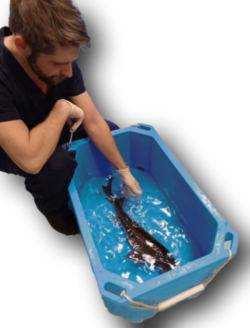
- The main water box with a pump ensures a constant water flow.
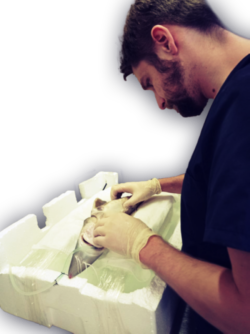
- The working table has a cutout for positioning the fish on its back.
- The pump tube is inserted into the fish’s mouth, and water flows over the gills. Wet cloth covers the fish to prevent drying.
An anesthetic is added to maintain the animal in a stable state throughout the procedure. The dosage of clove oil is 0.35 ml per 10 liters. Such fish are very sensitive to it.
Anatomy Considerations Affecting Suture Choice
- Fish skin is dense and tendon-like, easily detaching from muscle and slow to reattach.
- Detached skin sections necrotize quickly.
- Muscle fibers run perpendicular to the needle path, making rough sutures unreliable.
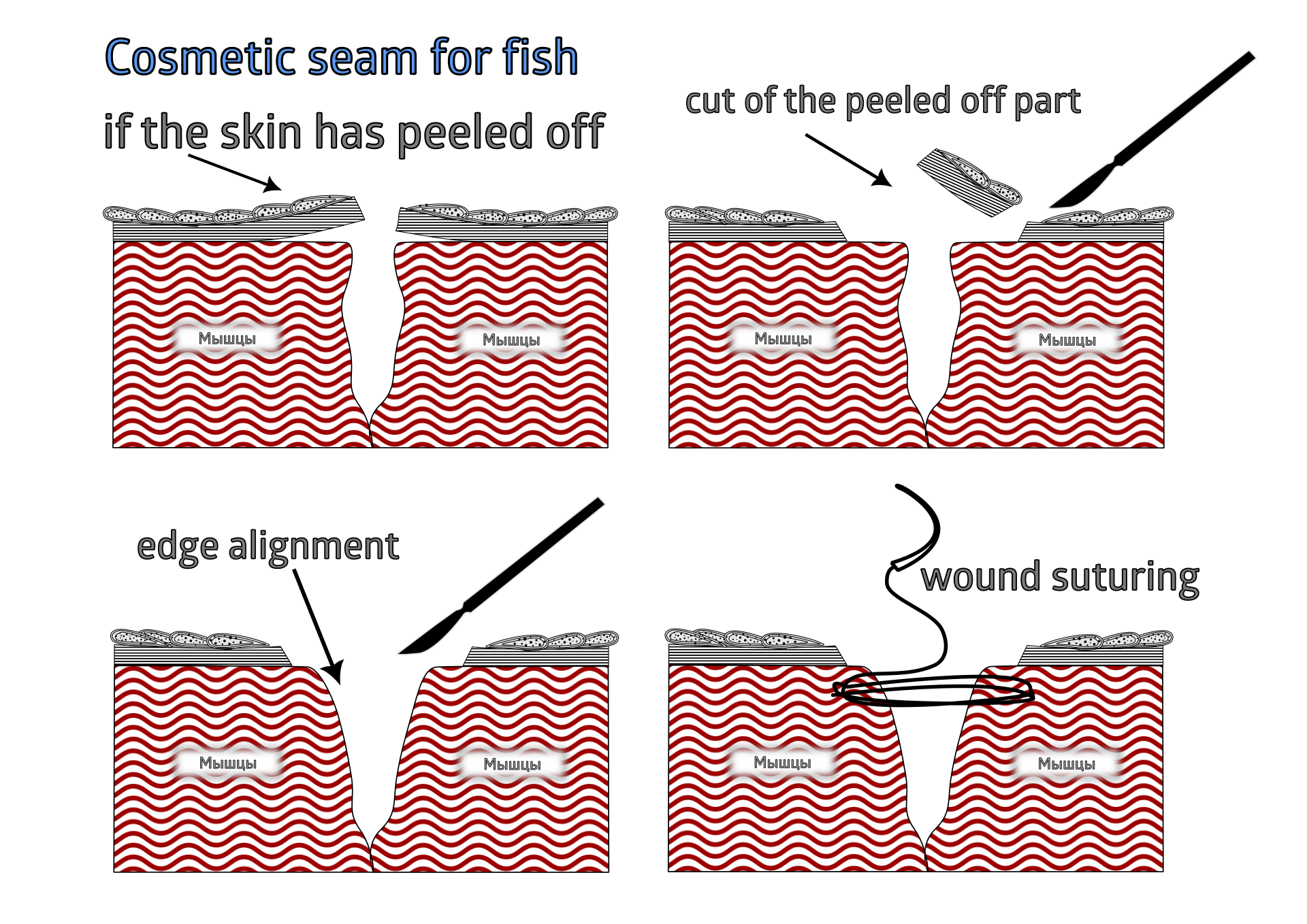
To avoid necrosis and ensure wound sealing :
- Superficial skin layers prone to necrosis are excised at an angle.
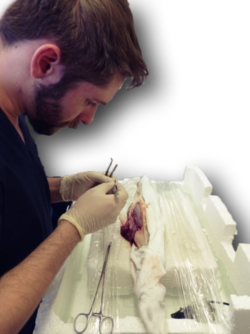
- Cosmetic sutures are applied parallel to the incision, keeping threads inside the tissue to approximate muscle edges.
- Muscle layers are sutured in two layers using a curved needle, minimizing water intrusion and accelerating healing.
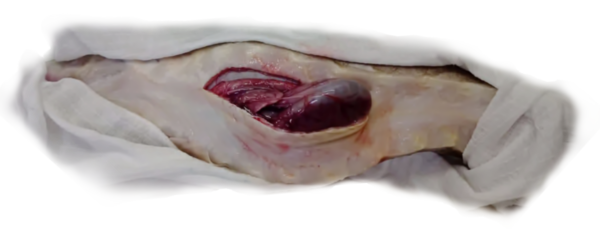
Intestinal Suturing Technique
The intestine is incised carefully to avoid major blood vessels. Hemostasis is achieved using a coagulator.
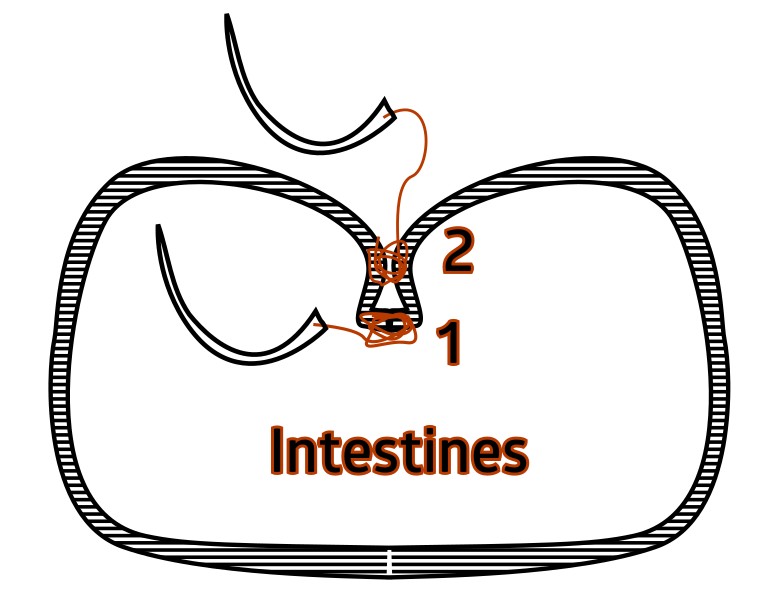
After removing foreign bodies or completing the target procedure, a simple “edge-to-edge” suture is applied for fixation. Then, an internal invaginating suture is placed, turning edges inward. This prevents adhesion with other organs and maintains smooth intestinal surfaces.
Results
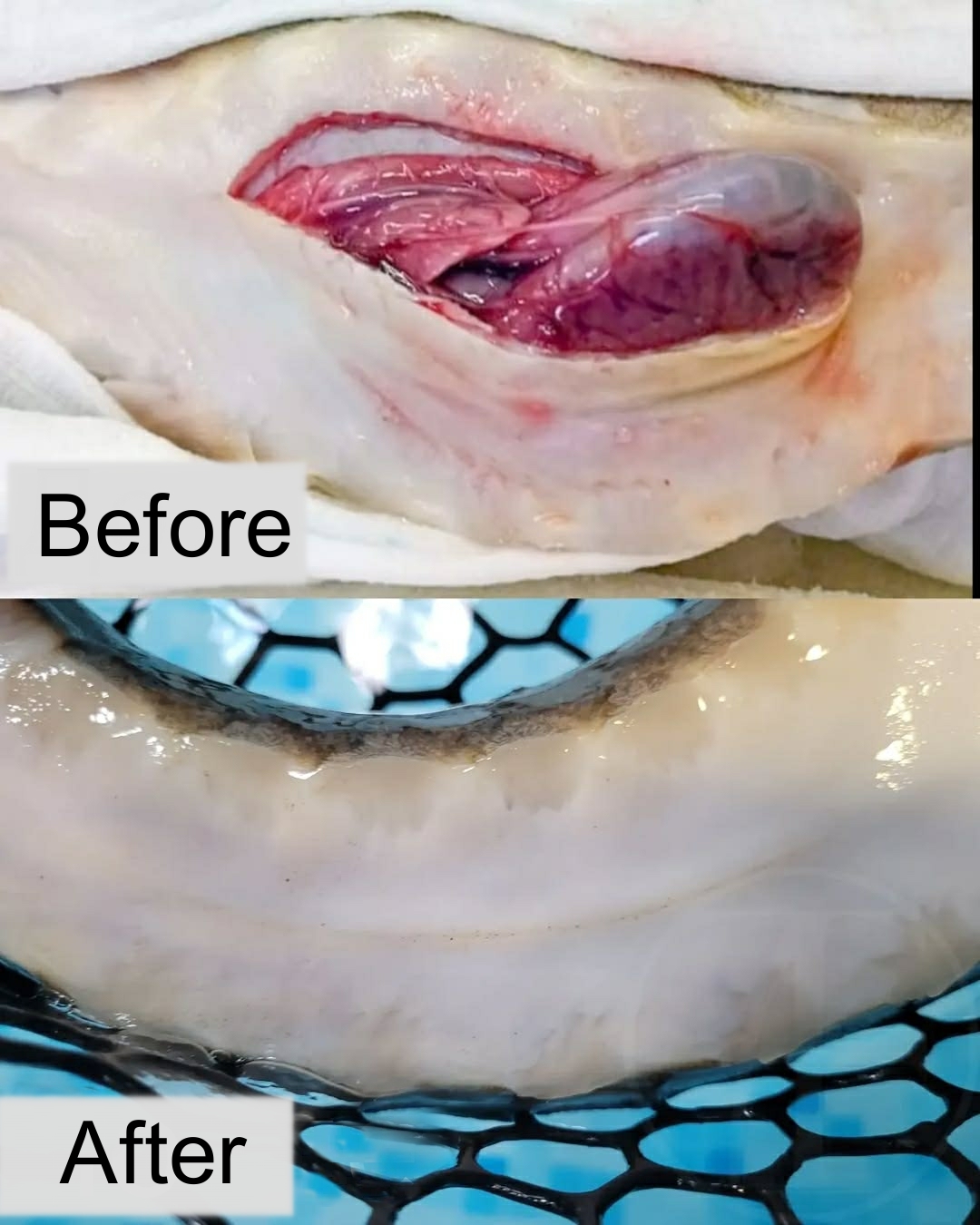
For a 40-cm kaluga, this technique showed high effectiveness:
- No necrosis in the operated area
- Hermetic sutures preventing water entry
- Minimal scarring
- Fish resumed eating within three days without complications
Conclusion
Using cosmetic skin suturing combined with internal intestinal sutures and anesthesia allows surgical procedures on aquatic animals to be performed gently. This is especially crucial for valuable or singular specimens, where each chance of successful recovery matters.
REFERENCES
- Harms C. Surgery in Fish Research: Common Procedures and Postoperative Care // Lab Anim. 2005. Т. 34. С. 28–34.
- Harms C. A., Lewbart G. A. Surgery in fish // Veterinary Clin. North Am. Exot. Anim. Pract. 2000. Т. 3. № 3. С. 759–774.
FAQ
Can fish undergo surgery?
Yes, with proper anesthesia and technique.
Why is water supplied through the mouth?
To maintain gill ventilation during the procedure.
Why are standard sutures unsuitable?
They increase tissue damage and risk of necrosis.
What is the advantage of cosmetic sutures?
They minimize trauma and improve healing.
Is surgery risky for fish?
Yes, but risks can be reduced with proper methods.